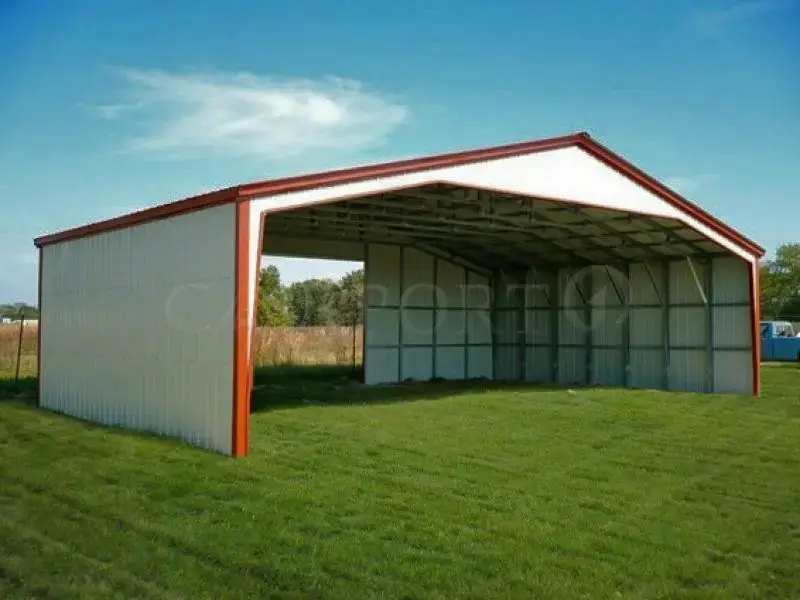
Steel Buildings in Minnesota: Serious Structures for the Nation’s Toughest Climate
There is no polite way to say it — Minnesota winters are brutal. When temperatures plunge to 30 below zero and the snow stacks up past your mailbox by January, the building protecting your vehicles, equipment, livestock, or inventory had better be built to take that punishment without flinching. That is why steel construction has become the standard for practical-minded Minnesotans who want structures that perform in conditions most of the country cannot even imagine.
From the farmlands of the Minnesota River Valley to the iron-rich expanses of the Arrowhead region, metal buildings in Minnesota are standing up to some of the most demanding weather on the continent. Carport1 designs, delivers, and installs custom steel buildings across the state — every one engineered to handle your county’s specific snow loads, wind requirements, and temperature extremes.
Minnesota Weather by the Numbers: Why Material Choice Matters
Extreme Cold
Minnesota holds the distinction of being one of the coldest states in the lower 48. The all-time record low is negative 60 degrees Fahrenheit, recorded in Tower. Even setting aside that extreme, January average low temperatures across northern Minnesota commonly sit between -10 and -20 degrees F, and wind chills push the effective temperature far lower than that.
What does extreme cold mean for buildings? Wood becomes brittle and cracks. Concrete can spall. Seals and caulking fail. Steel, by contrast, maintains its structural integrity across the full temperature range. A properly engineered steel building performs identically at -30 as it does at 90 degrees — and in Minnesota, that range is not hypothetical, it is annual.
Snow Loads: The Defining Engineering Challenge
Minnesota’s ground snow loads are among the highest in the contiguous United States. Here is what the numbers look like across the state:
- Southern Minnesota (Rochester, Mankato, Worthington): Ground snow loads typically 40 to 50 PSF
- Twin Cities Metro (Minneapolis, St. Paul, suburbs): 42 to 50 PSF
- Central Minnesota (St. Cloud, Brainerd, Alexandria): 50 to 60 PSF
- Northern Minnesota (Duluth, Bemidji, International Falls): 60 to 70+ PSF
- Lake Superior Highlands (North Shore): Up to 80+ PSF
Annual snowfall ranges from 40 inches in the south and west to 70 inches in the northern highlands near Lake Superior, with extreme seasons recording over 170 inches along the North Shore. Minnesota’s building code, administered through the Department of Labor and Industry (DLI), requires all structures to be designed for the specific ground snow load of their location, with roof snow loads calculated using standard conversion factors.
Wind and Severe Storms
Minnesota is not just a cold-weather state — it sits at the northern edge of severe thunderstorm and tornado territory. The western and southern portions of the state see the highest frequency of tornadoes, while strong straight-line winds (derechos) can affect the entire state during summer months. Metal buildings with proper bracing and wind certification handle these events far more predictably than pole barns or wood-framed structures.
What Minnesota Property Owners Build with Steel
Agricultural Buildings
Agriculture is the backbone of Minnesota’s economy. The state’s farms produced over $21 billion in agricultural products in 2023, making it one of the top agricultural states in the nation. Key commodities include corn, soybeans, hay, wheat, sugar beets, potatoes, and an enormous livestock sector featuring hogs, dairy cattle, and turkeys.
Metal agricultural buildings across Minnesota serve as machinery storage for combines and planters, grain staging areas, livestock shelters, and covered workshop space for the repair work that keeps a farming operation running. A steel machine shed protects a $500,000 combine from the elements — and considering that equipment sits idle for months during winter, covered storage is not a luxury, it is basic asset management.
Residential Garages and Cold-Weather Shelters
There may be no state in the country where a garage matters more than Minnesota. At 20 below zero, a vehicle that sits outside overnight may not start in the morning. An enclosed, insulated metal garage in Minnesota protects vehicles from extreme cold, prevents frozen door locks and dead batteries, and gives you a workspace that does not require Arctic expedition gear to use in February. Many of our Minnesota customers add insulation and heating systems to their metal garages, creating genuine four-season utility buildings.
Commercial and Industrial
The Twin Cities metro area anchors a diversified economy that includes healthcare (Mayo Clinic’s influence extends well beyond Rochester), financial services, food processing, and a growing renewable energy sector. Wind and solar now account for one-third of Minnesota’s power generation, and the infrastructure supporting those industries — maintenance shops, equipment storage, staging buildings — increasingly relies on commercial steel construction. Metal buildings offer the scalability, clear-span interior space, and rapid installation timeline that commercial operators need.
Recreational Vehicle and Equipment Storage
Minnesota is the “Land of 10,000 Lakes” — actually over 11,000 — and the recreational culture that comes with that geography means boats, snowmobiles, ATVs, ice fishing houses, and RVs. A lot of them. A metal RV cover or enclosed storage building is the practical answer to protecting these investments from eight months of snow, ice, and UV exposure. Cabin owners across northern Minnesota build metal storage structures to keep seasonal equipment protected and organized.
Engineering Specifications for Minnesota Metal Buildings
- Frame Gauge: 12-gauge steel is the recommended standard for Minnesota. The combination of heavy snow loads and extreme temperature cycling makes heavier framing a smart investment rather than an optional upgrade.
- Roof Style: Vertical roof — no exceptions. In a state where snow loads routinely exceed 40 PSF and approach 80 PSF in some areas, you need snow to shed off the roof rather than sit on it. Vertical panels with a steep pitch are the single most important design choice for a Minnesota metal building.
- Roof Pitch: Steeper is better. A 4/12 pitch or higher gives snow a clear path to slide off vertical panels, keeping the effective load well below the structure’s rated capacity.
- Snow Load Rating: Must match your specific location per Minnesota building code. Your county building department will specify the ground snow load — do not guess on this. Under-engineering for snow load is how buildings collapse.
- Insulation: Not technically a structural specification, but practically essential. Vinyl-backed insulation or spray foam reduces condensation (a major problem in uninsulated metal buildings during spring thaw) and makes heated spaces vastly more energy-efficient.
Regional Considerations Across Minnesota
Twin Cities Metro and Southern Minnesota
The metro area and the agricultural regions to the south and west have the most moderate conditions in the state — though “moderate” in Minnesota still means 40 to 50 PSF snow loads and winter temperatures well below zero. This region has the highest concentration of residential and commercial metal building installations. Permitting is handled through city and county building departments, and the process is generally straightforward for standard structures. Agricultural operations in the corn and soybean belt south of the metro are major consumers of metal storage and equipment buildings.
Central Minnesota (St. Cloud to Brainerd to Alexandria)
Snow loads increase as you move north, with central Minnesota typically requiring 50 to 60 PSF. This region blends agriculture (dairy, livestock, small grains) with a growing recreational economy centered on the lakes district. Metal buildings here commonly serve dual purposes — a machine shed that also stores the pontoon boat, or a workshop that doubles as snowmobile storage. The transition from metro suburban development to more rural properties means fewer HOA restrictions and larger lots that accommodate bigger structures.
Northern Minnesota and the Arrowhead
From Bemidji to International Falls to the North Shore of Lake Superior, this is Minnesota at its most demanding. Snow loads reach 70 PSF and above. Construction seasons are compressed into as few as five warm-weather months. Access to remote properties can be challenging. But the need for metal buildings is enormous — from mining operations on the Iron Range to logging and forestry enterprises across the Arrowhead, to the thousands of cabins and recreational properties scattered throughout the region. Plan early, order early, and schedule installation for summer to avoid complications.
Permits and the Minnesota State Building Code
Minnesota has a statewide building code administered by the Department of Labor and Industry (DLI), which sets minimum requirements for all construction. Permits are issued at the local level by cities and counties. Important details for metal building projects:
- Building permits are required for new structures in virtually all Minnesota jurisdictions.
- Agricultural building exemptions are available under specific conditions. To qualify, the land must be classified as agricultural for tax purposes, the parcel must be 10 contiguous acres or more, and the building must be used exclusively for agricultural purposes (no living space). Even when exempt from the building code, agricultural buildings must still comply with the Minnesota State Electrical Code — there is no electrical exemption for farm buildings.
- Snow load documentation is required on building plans. The local building official will specify the ground snow load for your site.
- Energy code compliance applies to heated or conditioned buildings.
Why Carport1 for Minnesota
Minnesota is not a market where you can get away with selling flimsy, under-engineered metal buildings. The climate simply will not allow it. Every Carport1 structure installed in Minnesota is specified for the exact snow loads, wind ratings, and conditions of your location. We do not ship generic buildings and cross our fingers — we build to your site requirements.
Free delivery and installation are included on every order, and our installation crews work efficiently during Minnesota’s construction-friendly months to get your building up before the first snowfall. From single-car carports in Eagan to 60-foot-wide agricultural buildings in Willmar, we have the product range and engineering capability to serve the entire state.
Call 1-877-242-0393 or request a free quote online to discuss your Minnesota metal building project.
Frequently Asked Questions: Steel Buildings in Minnesota
Can a metal building really handle Minnesota winters?
When properly engineered, yes — and they handle them better than most alternatives. Steel maintains full structural strength at temperatures well below zero, and a vertical roof with adequate snow load rating sheds accumulation effectively. The key is matching your building’s specifications to your location’s actual snow load and wind requirements. A building rated for 60 PSF and installed in an area that receives 60 PSF loads will perform exactly as designed.
Do I qualify for an agricultural building exemption in Minnesota?
You may, if your property meets the criteria: agricultural tax classification, 10 or more contiguous acres, and a building used exclusively for farming purposes with no living space. However, even exempt buildings must comply with electrical codes and may still require a zoning review. Contact your county building department to confirm eligibility for your specific situation.
What is the best roof pitch for heavy snow in Minnesota?
A steeper pitch promotes snow shedding and reduces the effective load on your roof. For most Minnesota locations, a 4/12 pitch or higher paired with a vertical roof style provides optimal snow shedding. In areas with the heaviest snow loads (northern Minnesota, 60+ PSF), some property owners opt for even steeper pitches. Your Carport1 building specialist can recommend the right combination for your location.
Should I insulate my metal building in Minnesota?
If you plan to heat the building or use it during winter months, insulation is strongly recommended. Beyond energy savings, insulation prevents condensation from forming on the interior surfaces of the metal panels during temperature transitions — particularly during spring thaw when warm daytime air meets cold steel. Even for unheated storage buildings, a basic vapor barrier can reduce condensation-related moisture issues.
When is the best time to install a metal building in Minnesota?
May through October is the ideal installation window. Ground conditions are workable, concrete can cure properly, and the weather cooperates for efficient crew work. For northern Minnesota and the Iron Range, June through September is the safest window. We recommend ordering several months ahead of your desired installation date, especially for spring and summer slots, which are the highest-demand periods in Minnesota.