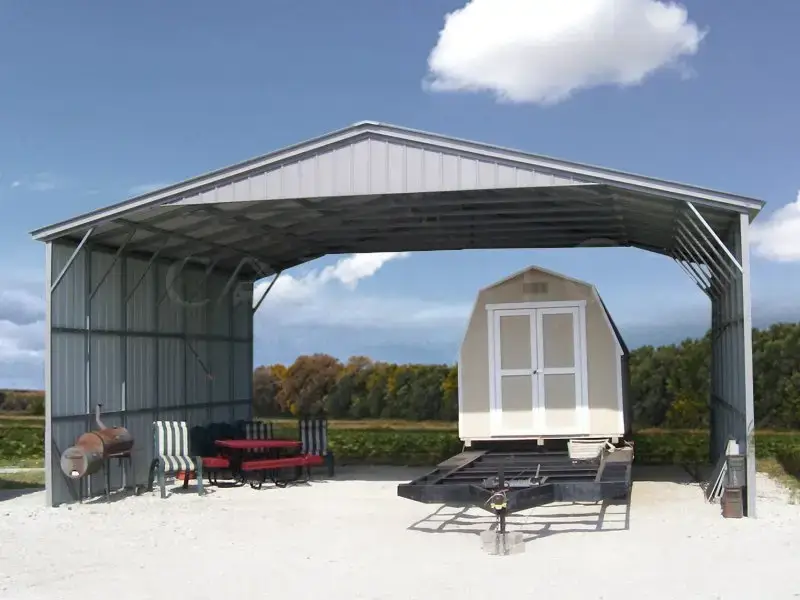
Metal Buildings in Indiana: Where Midwest Grit Meets Smart Construction
Indiana sits right in the teeth of the Midwest weather machine. Lake-effect snow hammers the northern counties. Tornadoes carve paths across the central flatlands. Spring rains flood the river valleys. And summer heat and humidity turn any poorly ventilated building into a sweatbox. Hoosiers know their weather, and they know that a building has to be tough enough to earn its place on their property.
That toughness is why metal buildings in Indiana have overtaken traditional wood-framed construction for garages, barns, workshops, and commercial structures across the state. A steel building does not rot from Indiana’s moisture. It does not buckle under the weight of a February snowstorm. And it does not require the constant painting, sealing, and patching that wood demands in a climate that swings 100 degrees between July and January.
Indiana’s Climate: A Building Stress Test That Never Ends
Indiana’s long-term average annual precipitation is 40.5 inches, but that number masks enormous regional variation. Southern Indiana near Evansville receives around 47 inches of rain per year, while northern counties average closer to 37 inches. Precipitation has trended above average consistently since 1990, which means buildings installed today face even more moisture exposure than those put up a generation ago.
Snow Loads: The North-South Divide
Snowfall in Indiana varies dramatically based on where you are. The southwest corner of the state averages just 14 inches annually, while the lake-effect snow belt in north-central Indiana — the region around South Bend, Elkhart, and Michigan City — can receive more than 76 inches per year. That is a staggering difference, and it means the snow load engineering requirements for a metal building in LaPorte County are fundamentally different from those in Warrick County.
For northern Indiana, a metal building must be certified for higher snow loads — typically 25 to 35 psf depending on the specific location. A vertical roof is essential in the snow belt to prevent accumulation. In southern Indiana, snow loads are a lesser concern, but the increased rainfall and storm severity shift the engineering focus toward water management and wind resistance.
Tornadoes and Severe Storms
Indiana averages about 19 tornadoes per year, with the most active period running from April through June. The state also experiences frequent severe thunderstorms with damaging straight-line winds, large hail, and intense lightning. Building design wind speeds across Indiana typically range from 115 to 120 mph. For property owners in tornado-prone areas, experts recommend metal buildings with vertical roofs, concrete foundations with anchor bolts, and 14-gauge or heavier steel framing.
How Hoosiers Use Metal Buildings
Manufacturing and the RV Industry
Indiana is home to the largest concentration of manufacturing employment in the nation. The state ranks second nationally in auto production, with five assembly plants and over 500 auto suppliers employing more than 100,000 people. But Indiana’s most distinctive manufacturing claim to fame sits in the north: Elkhart, Indiana, is the RV Capital of the World, producing nearly 84 percent of all recreational vehicles manufactured in the United States.
The RV industry alone contributes over $32.4 billion annually to Indiana’s economy and supports more than 126,000 jobs. The suppliers, fabricators, and subcontractors that feed this industry need durable, cost-effective workspace — and metal buildings deliver exactly that. Steel-framed workshops, parts warehouses, and assembly support facilities are everywhere in northern Indiana’s manufacturing corridor.
For individual RV owners, a metal RV cover or enclosed RV garage is a smart investment. Indiana’s freeze-thaw cycles, road salt exposure, and hailstorms can ravage an RV’s exterior. A covered structure protects that investment year-round.
Agriculture
Agriculture remains a cornerstone of Indiana’s economy, with the state ranking among the national leaders in corn, soybean, hog, and poultry production. Indiana farmers face a particular challenge with spring flooding, which delays planting and reduces yields. Having reliable, weathertight storage for equipment and harvested crops is not a luxury — it is a necessity. Metal barns and agricultural buildings with concrete floors and proper drainage provide the protection that Indiana’s unpredictable springs demand.
Residential Garages and Workshops
From the suburban neighborhoods of Indianapolis and Fort Wayne to the small towns and rural acreages across the state, Hoosiers are installing metal garages and workshops for practical, everyday use. Indiana has a deeply rooted car culture — the Indianapolis 500 is the biggest single-day sporting event in the world — and many homeowners want dedicated garage space for vehicle restoration, maintenance, and storage. A steel workshop with electricity, lighting, and a concrete floor becomes a year-round workspace that wood construction simply cannot match for durability and value.
Spec Recommendations for Indiana Metal Buildings
- Northern Indiana (snow belt): 12-gauge or 14-gauge framing, vertical roof mandatory, certified for 25-35 psf snow loads, minimum 10-foot leg height for equipment access.
- Central Indiana: 14-gauge framing, vertical roof recommended, standard snow load certification, wind-rated for 115-120 mph.
- Southern Indiana: 14-gauge framing, vertical roof recommended for heavy rain management, standard snow loads acceptable, focus on proper anchoring and drainage for flood-prone areas.
- RV storage: Minimum 14-foot leg height and 14-foot wide bays for modern Class A and Class C motorhomes. Consider drive-through designs with roll-up doors on both ends for easy access.
Regional Needs Across Indiana
Northern Indiana — The Snow Belt and Manufacturing Corridor
The counties along the Lake Michigan shoreline and extending inland to Elkhart and South Bend represent Indiana’s heaviest snow load zone. Lake-effect events can dump 6 to 12 inches of snow in a single night, and the accumulation over a winter season can be punishing. Metal buildings in this region absolutely require vertical roofs and snow load ratings appropriate to the specific location. This is also the heart of Indiana’s RV and manufactured housing industry, so commercial metal buildings for manufacturing support, parts storage, and distribution are in high demand.
Central Indiana — Indianapolis and the Agricultural Heartland
The central corridor from Indianapolis through Lafayette and Muncie combines suburban residential demand with extensive agricultural use. This is where Indiana’s auto racing heritage drives strong demand for workshop garages, and where large-scale farming operations need equipment barns that can shelter combines and planters spanning 30 to 60 feet in width. Flat, open terrain means wind exposure is significant, and proper anchoring to concrete foundations is essential.
Southern Indiana — Hills, Hardwoods, and River Valleys
Southern Indiana’s terrain shifts to rolling hills and river valleys — the Ohio River, Wabash River, and White River systems create flood-prone lowlands throughout the region. Metal buildings in southern Indiana should be sited with flood risk in mind, and elevating the building pad above the local flood plain is a smart precaution. The economy here is driven by agriculture, small manufacturing, limestone quarrying, and the growing outdoor recreation sector. Boat storage, hunting camp buildings, and hobby workshops are popular metal building applications in this region.
Permitting Metal Buildings in Indiana
Most Indiana counties and municipalities require a building permit for new construction, including metal carports, garages, barns, and commercial structures. Some jurisdictions exempt detached accessory structures under 200 square feet, but carports and garages typically exceed that threshold. In Indianapolis and Marion County, structural requirements are specific — carport and porch posts must have footings that meet local code tables for size and depth.
Indiana has adopted the 2020 Indiana Residential Code (based on the 2018 IRC) and the Indiana Building Code (based on the 2012 IBC with state amendments). Permit requirements, fees, and inspection procedures vary by county and city, so contact your local building department before placing your order. If electrical wiring or plumbing will be included, separate permits are typically required.
Why Carport1 Is Indiana’s Metal Building Partner
Carport1 delivers and installs metal buildings throughout Indiana, from the snow belt counties in the north to the river valleys in the south. We know that a building in Gary needs different specs than one in Evansville, and our team configures every order to match your specific location’s weather requirements.
Every Carport1 structure includes free delivery and free installation. We handle the logistics, the setup, and the anchoring so that all you need to provide is a prepared site. Our buildings are backed by a manufacturer’s warranty and built with American steel.
Call 1-877-242-0393 or request your free quote to find the right metal building for your Indiana property.
Frequently Asked Questions About Metal Buildings in Indiana
How much snow can a metal building in Indiana handle?
That depends on the building’s snow load certification. In northern Indiana’s lake-effect snow belt, buildings should be rated for 25 to 35 psf of ground snow load. Central Indiana typically requires 20 to 25 psf. Your Carport1 representative will confirm the exact snow load requirement for your location and ensure your building is properly rated.
What size metal building do I need for RV storage in Indiana?
For a standard Class C motorhome, you need a minimum of 12 feet of clearance height and at least 12 feet of door width. For larger Class A motorhomes, a 14-foot leg height and 14-foot wide door opening are recommended. Drive-through designs with doors on both ends make access much easier, especially on narrow lots.
Are metal buildings good for Indiana’s humid summers?
Yes, and they are actually superior to wood in humid conditions. Metal does not absorb moisture, so it will not rot, warp, or develop mold the way wood framing does. Proper ventilation — ridge vents and gable vents — helps manage condensation inside the building during temperature transitions between seasons.
Do I need a concrete foundation for a metal building in Indiana?
It depends on the building’s purpose and your local code requirements. A concrete slab is recommended for enclosed garages, workshops, and any building where you want a clean, level floor. For open carports and some agricultural shelters, gravel pads with ground anchors may be sufficient. Check with your local building authority for foundation requirements in your area.
How fast can a metal building be installed in Indiana?
Most residential metal buildings — carports, garages, and small workshops — are installed in a single day by our professional crew. Larger agricultural and commercial buildings may take two to three days depending on size and complexity. Compare that to weeks or months for traditional stick-built construction, and the advantage is clear.